
(moved over from Learning - Ceramics now that I have more direct experience 😅)
Ceramics
This art form has a higher barrier to entry than e.g. Learning to draw (again?), but if you look, you can probably find a community studio with either 4 week classes or one day classes to try out, and once you’ve taken a class, there are often opportunities to join the studio with a monthly fee to continue using the space and the equipment. You can also get started at home and just rent space in a kiln for firing.
I did a fun “date night” pottery class and watched the first three of these videos in advance to get a basic understanding of what I’d be encountering. Also maybe worth checking out The Great Pottery Throwdown (a British show that HBO Max picked up).
This is a craft where there’s no real substitute for clocked practice, so don’t be discouraged if you’re a few hours in and haven’t made a keeper on the wheel. But also note that it takes a long time (and many stages where disaster can strike) for something to go from soft clay to a finished piece (a week or more at the quickest), so if you are hoping to create an object, it can be good to:
1. Make many pieces at the start
to have more than one egg in your basket to learn with/practice on at subsequent stages and to increase the odds that one will make it all the way through and
2. Have a final vision in mind from the get-go
because e.g. the thickness of the base will constrain your options to make a foot during trimming, the texture can dramatically affect how the glaze looks (you can throw with texture or you can throw thickly and carve during trimming), and depending on how you’re intending to glaze, you may also want to make choices along the way (like making a foot that’s easy to hold if you’re planning to dip just the top), etc.
(though don’t stress—in some ways, beginner pots can be significantly more interesting by accident!)
Wheel throwing
A good friend took a pottery class at the UofM and continuously struggled with centering her clay, ultimately deciding that hand building is the way to go, even for things like vases 😅 The wheel is fun, but it’s not the only way to make pottery.
Centering: the wheel only really works if the clay is centered. I think the most important concept here is that you need to really brace your arms so that your hands can solidly define where the clay can and can’t go, removing any wobbles.
Opening up the clay and forming a base. The thickness of the base should factor in your plans for the piece: do you want a foot? you’ll have a chance to carve away the excess to reveal the foot later during trimming.
Pulling up the walls to form a cylinder (which you can then form into bowls, cups, vases, etc.)
Lifting pots off the wheel is much more difficult than this, especially if you’re just starting out, because the longer you have the clay on the wheel, the more water it absorbs and the more floppy the clay becomes, so your form can distort when you go to lift it. There are tools for sliding under the piece to lift it off, but you can also use multiple bats (a board that goes on the wheel and can be lifted away with the piece on it to firm up before trying to remove the thrown piece), or a single bat with a cutout for multiple bat inserts.
Drying:
Typically fresh pieces are loosely covered in plastic for a day or more to ensure even drying. This reduces cracking that occurs when the outside or thin edges are drying and shrinking more quickly than the thicker interior/base which isn't exposed to the air. Once your piece is “leather hard” you can trim it.
Trimming:
Keep in mind that at this stage (all the way through bone dry) you can still reuse all this clay: trimmings, ruined pieces, etc. so I think it makes sense to go for quantity rather than quality for the sake of learning.
It’s only after you’ve finished this step and have fired your clay for the first time (bisque firing) that the clay undergoes a chemical change and is ready for glazing.
Glazing:
You can dip your pieces into a bucket of glaze or you can paint it on. (The paint-your-own-pottery classes are usually using “underglazes” in squeeze bottles for detailed designs and then the instructors dip in clear glaze afterwards.) The glaze dries like powder on your piece, but at high temperatures it basically becomes molten glass, so you’ll need to make sure it doesn’t fuse to the shelf or other pieces in the kiln. Painting wax onto the base is a good start, but you also need to track how drippy your particular glaze is, and factor in the number of coats/thickness.
(she has a home studio and produces beautiful work—apparently 2,000 pieces a year!)
Note: it’s a personal choice, but I think it makes sense to allow your work to be imperfect without being down on yourself. It’s so cool that it’s made by hand, and imperfections are a reminder of that.
(definitely the perspective of this friendly pottery YouTuber)

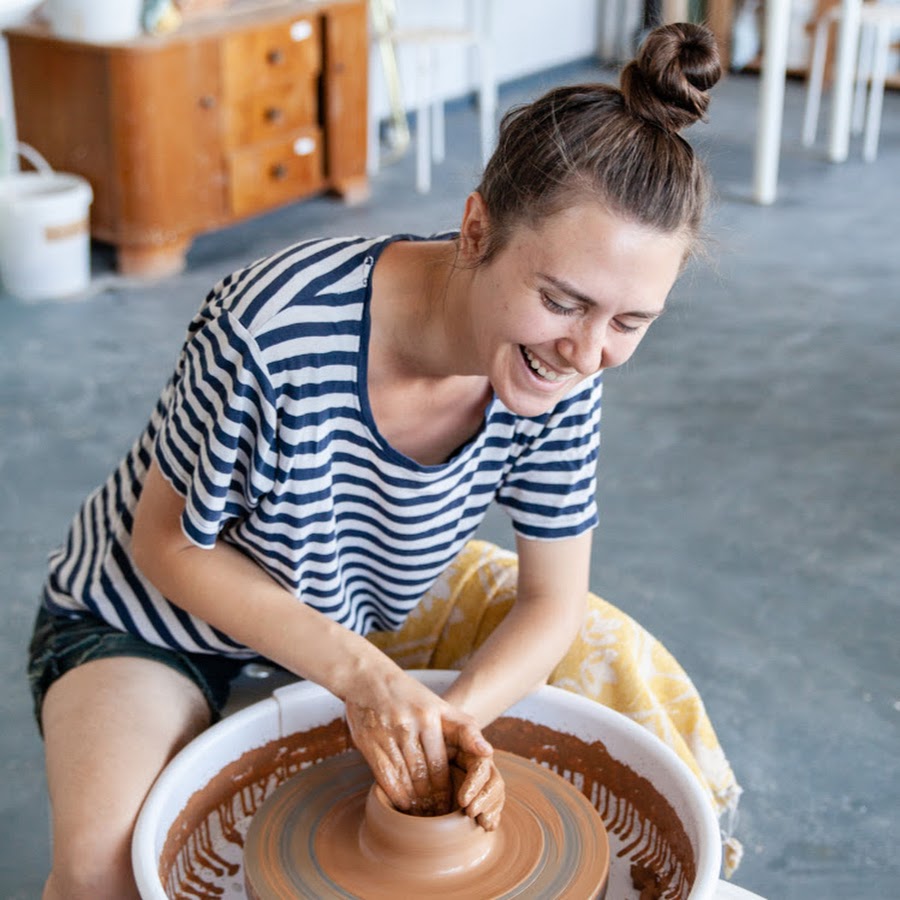
Here she is with a video encouraging you to start and explaining how:
And here are the tools she recommends.
And resources:


Other YouTubers:
I like this Danish guy’s vibe


(I also have a friend who’s a potter! Things from My Friends - Brad is and does many things: chef, engineer, Australian, fixing up Corvairs, making and consuming delicious food, figuring out brilliant solutions to problems in chemical engineering labs, and managing to know ~everyone in the East Bay. But he is also a ceramicist!)
Here’s one successful professional potter’s timeline of learning, apprenticing, etc.