
Winding down/Helping your body know it's sleep time
The basic idea here is that your body naturally produces melatonin to help you get to sleep. But your body is using the ambient light to determine that it's night/that you should be winding down. So with artificial "sunlight" in the form of lamps and screens, your body may not be getting the right cues. Here are some things that might help:
For starters—before experimenting with supplementing—make sure you get a nice dose of direct sunlight first thing in the morning (e.g. 10 min) and see how that affects things.
The available dosage for melatonin is all over the map. The people I know and trust recommend less than 1mg. This is 30% of a mg.

(there are mixtures like "Dreamwater" that also include 5-HTP and GABA, or OLLY Gummies with L Theanine, chamomile, & lemon Balm) but products like this tend to use >1mg of Melatonin, so I recommend DIY)
Update: I spent ages not being able to sleep through the night (but for whatever reason not taking more melatonin when I’d wake up, so I’d just lie there for hours) and then read about the possibility of the drop in that initial melatonin boost triggering you to wake up. So I now take 300mcg of melatonin in a 6hr time release tablet and it seems to have solved the problem.
I take a melatonin tablet with a small fizzy potion of powdered 🌿Magnesium (+ Vitamin C + Calcium) before I start getting ready for bed (I wouldn’t be surprised if the ritual helps).
Update: I’m now trying magnesium glycinate, because apparently it’s more bio-available. Unfortunately it tastes terrible, so I’m taking big horse pills, though I have a friend who has discovered a flavored powder that he tolerates.
I discovered these when trying to find some sort of cover to make the light from my 📚Kindle Paperwhite (reading) warmer (the new kindles have this built in, fyi). It's a pretty good general solution and they really seem to make me feel calmer/more relaxed. When I have to take them off to e.g. wash my face before bed, I feel like a pouty toddler. (people also reference this and flux when talking about reducing eye-strain from computer work)

Update: apparently “FL-41” rose colored glasses are a thing, and are maybe less good for blocking blue light but more good for soothing/mitigating the effects of harsh lights. I’m testing these out—they’re kinda big and dorky, but the full coverage is nice, as are the smooth plastic frames.

There's a useful app for automatically shifting the color spectrum of your computer screen to be warmer during the evening hours:
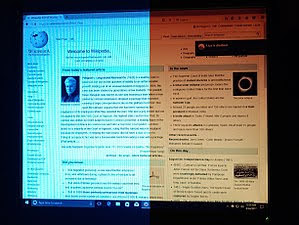
Update: the new mac OS has something like this built in called “Night Shift”

In the accessibility menu in iOS, you can use a triple tap of the home button (or triple tap of the side button) to "reduce the white point" to make your phone darker than it goes by default with the brightness gauge in the control center.
See details here: 🖥️Tech Tips - ♿️ Explore the “Accessibility” menus to e.g. make your screen (even) darker at night
See 💡Programmable lighting for more info on using lights to reinforce bedtime and wakeup time. But to start right away: 🤔Advice: drape a shirt over your lamp in the evening
Circadian rhythms are important; if you live with someone else, try to agree on a sleep schedule and hold one another accountable by e.g. turning off computers at the same time every night and helping them to be up in the morning by having a set breakfast date.
On the iPhone you can use "Downtime" to cut off access to all apps except for a few whitelisted exceptions, e.g. "Notes.” Also make use of Do-Not-Disturb + App Limits.
If this isn't effective, consider storing your phone and laptop in a room other than your bedroom.
There’s also a product called “Brick” that I’ve heard good things about (for people who need more help disconnecting).
Soaking (🛀Hot Tubs or just your feet)
🤔Advice: use a hairdryer under the covers to warm up
Drinking hot water or herbal tea 🫖
Lavender has the most evidence, but the ritual/training effect is probably also relevant. Some people spray it directly on their pillow, but you could also put a handkerchief to the side and spray that instead. I use a pure essential oil and just put a drop on a tissue (it was at grocery outlet and the Amazon reviews were good).
I don’t recommend the ”deep sleep pillow spray” it could be that I got a bad batch, but it has an undertone of mildew that lingers long after the intended scent has faded.
Staying asleep/getting back to sleep
See ◼️Blackout blinds 🕶️Eye mask for more on avoiding light hitting your eyelids during your designated sleep time.
My sister lives in Europe and has adopted their penchant for airing out the bedroom right before bed, regardless of how cold it is outside. It’s nice to snuggle under the covers when it’s chilly, and fresh air also seems good. If you use a space heater to keep your room temp constant overnight, I wouldn’t set it higher than 69F.
For jotting down "reminder" or "list" type thoughts that will be handled only by knowing that you won't forget them
Same as above:
On the iPhone you can use "Downtime" to cut off access to all apps except for a few whitelisted exceptions, e.g. "Notes.” Also make use of Do-Not-Disturb + App Limits.
If this isn't effective, consider storing your phone and laptop in a room other than your bedroom.
There’s also a product called “Brick” that I’ve heard good things about (for people who need more help disconnecting).
e.g. Thinking of gifts or other nice things you could do for friends and family, or thinking of the things you've discovered that might improve other people's lives 🙃
There’s a balance between being distracting enough to supersede unhelpful/busy/worrying thoughts and being mellow enough that your mind is fine drifting off instead of staying awake to pay attention.
I also listen at ~85% speed at bedtime.
See also: 🗃️Useful Services - Libby for digital library books
So that you won't wake up to pee and then have trouble falling back asleep. (If you’re a dude, consider using a pee bottle to minimize necessary alertness.)
If you do feel the urge to go, experiment with not. It may seem counterintuitive because you might think it's better to empty your bladder to be able to sleep through the night without further interruption, but I personally have found that my digestive system essentially hibernates during the night/when I'm sleeping and there's almost a "breaking the seal" phenomenon where if I pee once during the night, I'm more likely to pee more than once. (Though it's also the case that if I spend a long period of time awake in the night, I'm much more likely to need to pee — where I'm assuming my digestive system is essentially also "awake." So it could be that my data is being affected by that first wakeup affecting how deeply and quickly I get back to sleep).
If you’re worried about holding it too long: I recently read that you should be spending about 20 seconds per pee (obviously that can’t really be a proper “should,” but I never had any point of reference before, so seems good to add).
Warm soft light on the way to the bathroom and in the bathroom, a pathway without the need to walk barefoot on cold tile or hardwood floors, even a sweater for your toilet seat can help keep your body properly relaxed and sleepy. It’s also worth thinking about bathroom placement 🤔Advice: minimize navigation between bedroom and bathroom
(my current favorite nightlight for general use is so great that I keep a spare in my toiletry bag for travel: it’s small enough to leave the other outlet available, it’s backlit in a lovely warm amber with almost no blue light, you can set how bright you prefer it, and it has three modes: you can set it to come on anytime it’s dark (e.g. around a corner in the bathroom), only when it’s dark and it detects motion (e.g. hallway), or off (e.g. if it’s only necessary for guests). Two areas for improvement: 1. the 60 second motion detection setting is perfect for navigating a hallway, but doesn’t always stay on long enough to prevent someone needing to wave around while on the toilet and 2. the unit itself is glossy and has the logo embossed on it, so isn’t particularly attractive in the daylight)
This is maybe the weirdest and least rational of the bunch, but when I was in a really really tough spot and basically couldn’t sleep, a very dear friend sent me a link to an 8hr track of “sleep music” that’s supposed to play at a frequency that supports deep sleep. I have no idea whether there’s anything to it, but maybe having a weird supportive thing recommended by a loved one is magical all by itself 🤷♀️
So I’m sending this to you and I hope that it helps you when you need it 🤗
no alcohol, no food within X hours of bedtime, earlier sleep window, later sleep window, melatonin, sleeping with a partner vs. alone, colder room temperature, higher/lower humidity, etc. Sleep quality can be hard to track accurately, and there are a lot of possible levers to pull—this seems like a pretty great way to be able to infer from real data.
*(highly recommend heeding their advice by testing the sizing rings for 24+ hrs. If I had gone with the first one that seemed like the right size, I would’ve been miserable and assumed that wearables (as with thongs and flip flops and toe rings) just aren’t for me… Also, take your non-dominant hand, press your fingers together 🖐️ —> ✋ and look for gaps where your fingers meet your palm; if there’s room for the ring without encroaching too much on your neighboring finger, I think you’ll be happier—if there isn’t any space, don’t worry (you can probably hold water in your cupped hand better than the rest of us!), maybe your thumb would work? There’s also benefit from choosing a size that is comfortable on two of your fingers so that you can move it ocassionally to give your primary position a break, even just to dry off for a few minutes.)

